Start with the priority concern
The nurse first addresses the concern that creates the greatest immediate risk or prevents the client from participating safely.

MDC1 · Module 2 · Asset 12 · Level 5 Evaluate
Safe nursing care requires more than recognizing that a concern is present. The nurse must decide what requires attention first, which actions can safely follow, what other needs must be included, and whether the client’s response shows that the plan is working.
The strategy spine
A client may need privacy before discussing a concern, qualified interpreter support before teaching, reassessment before activity continues, correction of an infection-prevention gap before further exposure occurs, or urgent help when the condition is deteriorating.
The safest response depends on the client’s current findings, earlier status, immediate risks, preferences, and response to nursing actions.
The nurse first addresses the concern that creates the greatest immediate risk or prevents the client from participating safely.
Communication, education, privacy, comfort, documentation, handoff, supervision, and follow-up are integrated into the plan rather than treated as separate tasks.
Reassessment determines whether the strategy is effective or whether it must be continued, revised, communicated, or escalated.
Strategy lab 01
A safe communication strategy gives the client meaningful access to information and an opportunity to participate in care.
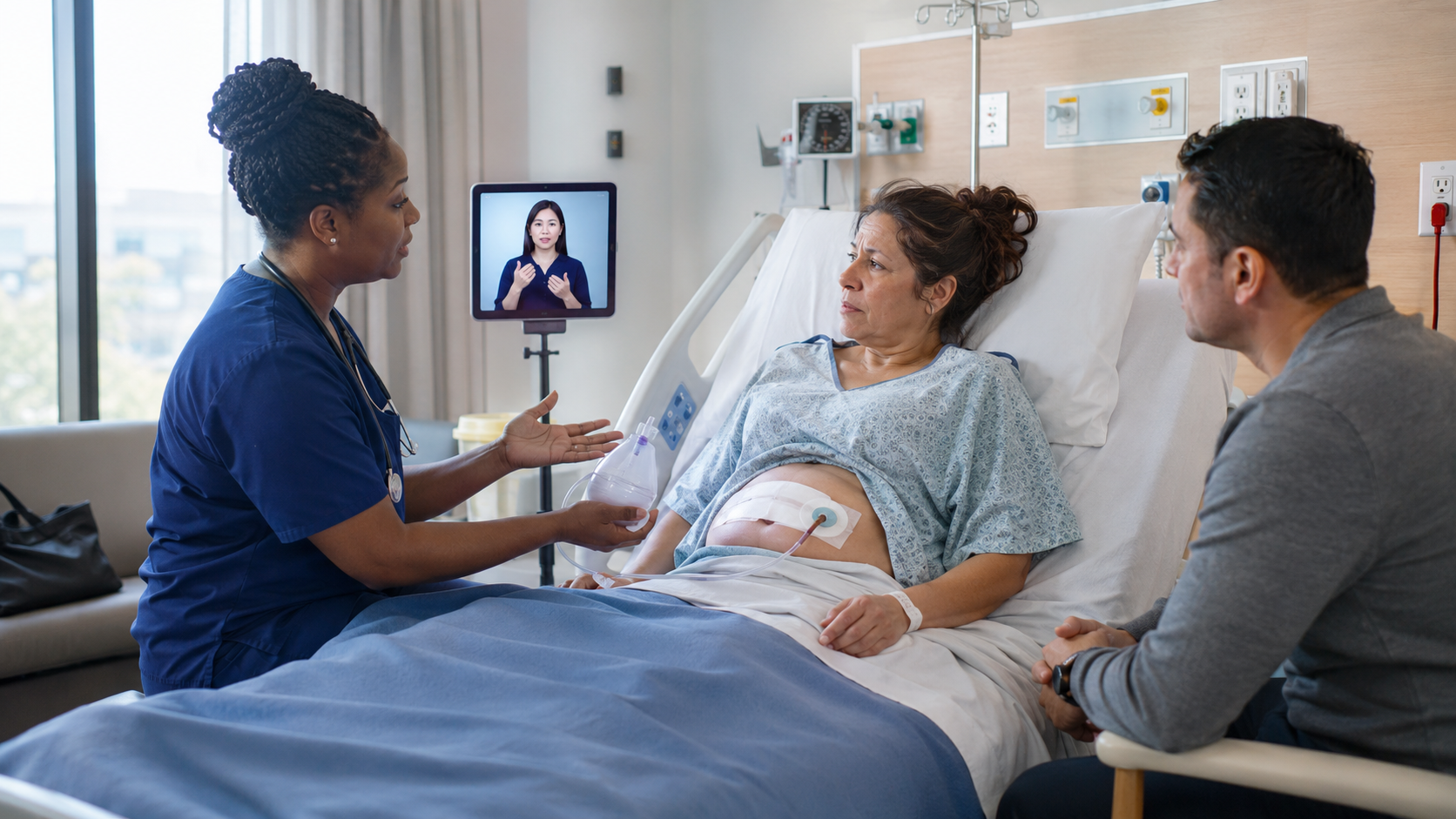
The nurse considers whether pain, anxiety, grief, fatigue, sensory impairment, aphasia, cognitive changes, delirium, language differences, low literacy, cultural preferences, caregiver involvement, or privacy concerns are affecting communication.
The important question is not simply whether a barrier exists. The nurse determines whether the current approach is helping the client understand, express needs, and participate safely.
Rapid questioning, false reassurance, redirection, or caregiver-dominated communication may cause the client to withdraw or stop sharing information. The nurse changes the approach by acknowledging the concern, allowing time, clarifying meaning, protecting privacy, or inviting the client to describe what matters most.
“I would like to hear from you first. Would you like your caregiver to remain involved, or would you prefer to speak privately?”
Caregiver involvement
If a caregiver begins answering most questions, the nurse evaluates whether the client still has an opportunity to speak. The strategy is incomplete if the client’s voice is lost or private information is discussed without permission.
The nurse confirms what may be shared, protects confidentiality, and directs communication to the client whenever possible.
Qualified interpretation
When the client prefers another language for important healthcare information, the nurse uses a qualified interpreter according to facility policy.
A caregiver may remain as a support person when the client agrees, but caregiver involvement does not replace qualified interpretation for assessment, education, discharge, sensitive communication, or consent-related discussions.
Stable need or new change?
A client with a known memory impairment may benefit from familiar routines, short directions, and repetition. A client who was attentive earlier but now gives inconsistent answers, cannot follow a familiar direction, or shows a change in behavior requires focused reassessment, safety support, objective documentation, and communication of the change.
Timing and environment
Pain, anxiety, grief, fatigue, and environmental stress may make detailed teaching ineffective. The nurse may need to address the immediate barrier, reduce distractions, divide teaching into smaller sections, or return to the information when the client can participate more safely.
Verify learning
When the client cannot explain the plan or perform a required skill, the nurse determines why the strategy did not work. Language, timing, format, environment, amount of information, communication support, caregiver role, or teaching method may need to change before learning is evaluated again.
Teach-back shows whether the client can explain information in their own words. Return demonstration shows whether the client can perform a skill safely. Documentation should show what the client actually explained or demonstrated.
Dependable support
A caregiver who says, “I cannot manage this alone,” may be showing a support and teaching gap. The nurse clarifies what feels unmanageable, evaluates what the caregiver understands or can demonstrate, documents the concern, and communicates the need for additional assistance.
The strategy is effective when the client or approved caregiver can use the information safely and knows when to seek help. It remains incomplete when understanding, performance, communication access, privacy, or follow-up needs are unresolved.
Choose the complete strategy
A client is preparing for discharge with a new surgical drain. The record lists Arabic as the client’s preferred language for healthcare discussions, and the client looks toward a caregiver before answering detailed questions.
The client says, “I do not want everyone hearing about my incision,” and the caregiver responds, “Just explain it to me because I will do everything at home.”
The client appears anxious, reports difficulty reading the instructions, correctly explains two findings to report, but contaminates the drain cap during return demonstration. The caregiver performs the skill correctly but says, “I cannot be here every day.”
Integrated strategy example 1
A client is preparing for discharge after receiving a new ostomy. The client usually requests an interpreter for healthcare discussions and appears increasingly anxious during pouch-care teaching. After watching the demonstration, the client cleans the skin correctly but places the pouch opening over the wrong area. The caregiver says, “I thought I could help, but I do not think I can do this by myself.”
During the teaching session, the client also reports dizziness. The blood pressure is lower than the earlier reading, and a potassium result is still pending. The discharge handoff has not yet been completed.
Strategy lab 02
A safe handoff carries unresolved needs to the next person responsible for care. The message is organized around what the receiving person needs to know and what must happen next.
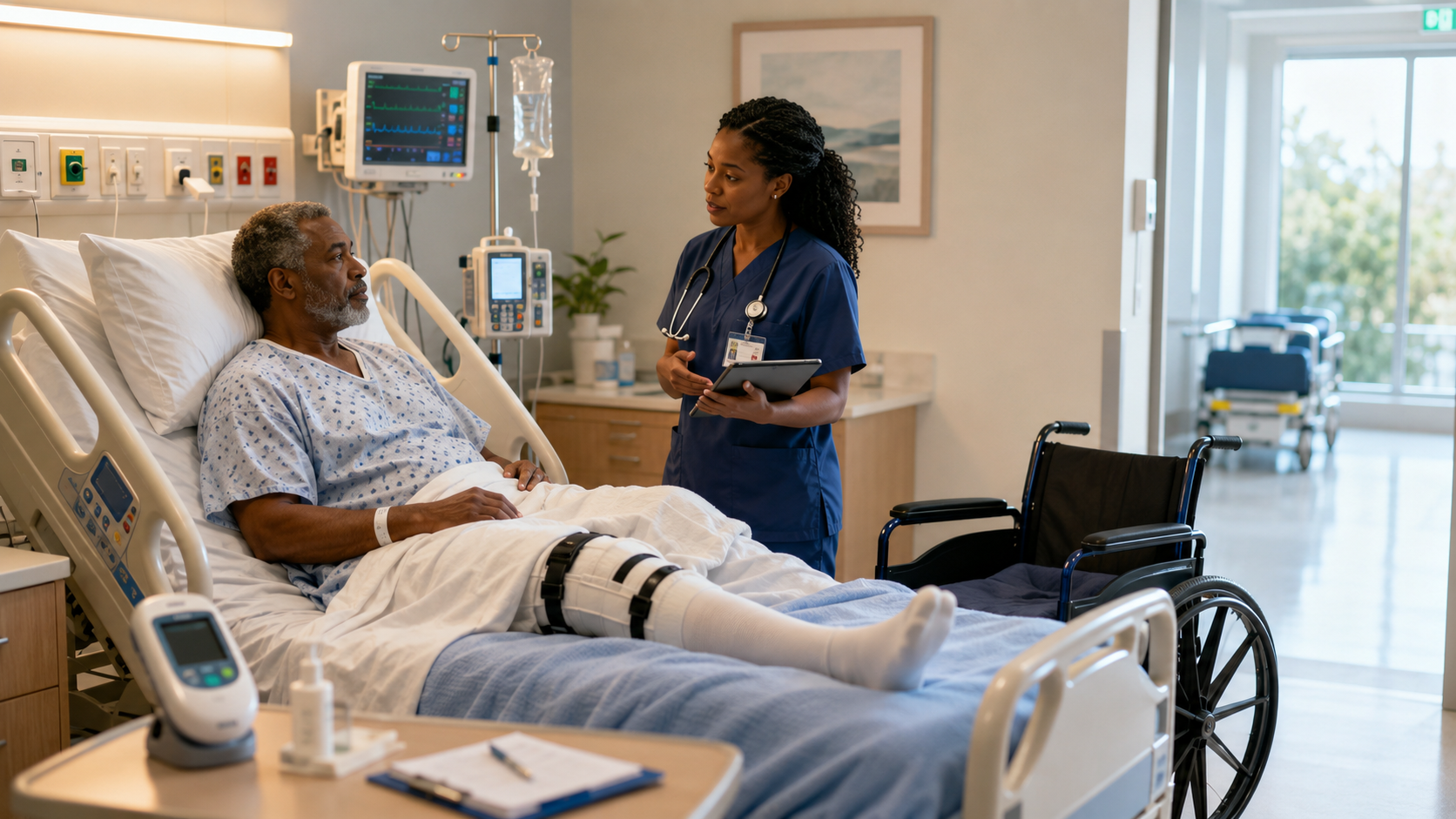
What belongs in handoff
Relevant information may include allergies, code status, isolation status, fall risk, mobility, communication and interpreter needs, lines, tubes, drains, devices, abnormal laboratory findings, pending tests, unstable vital signs, teaching gaps, refusals, recent changes, provider notification, and unresolved safety concerns.
Use SBAR well
SBAR can organize the message, but safety depends on the quality of the information and the follow-through. The nurse communicates what is happening now, the relevant background, current objective findings, actions already taken, and the response or follow-up that is needed.
Close the loop
The nurse confirms that the message was received and that responsibility for pending findings or unresolved concerns is clear. If no one has accepted responsibility for follow-up, the handoff is incomplete.
Document the response
The health record should show the findings that led to nursing action, the nursing response, communication or notification, the client’s response, and what still requires follow-up.
“Teaching completed,” “provider notified,” and “report given” do not show whether the concern was resolved. Documentation should be completed promptly enough to support current care.
Complete notification example
“RN/provider notified of new dizziness, lower blood-pressure trend, and inability to stand safely. Current assessment and fall-prevention actions communicated using SBAR. Further direction received and implemented. Client reassessed following intervention.”
The nurse clarifies the concern without coercion, evaluates whether pain, fear, misunderstanding, language needs, cultural needs, or privacy concerns are influencing the decision, and explains relevant risks and alternatives within scope. The client’s words, nursing actions, notification, and reassessment are documented.
When a safety event or near miss occurs, the nurse first protects and assesses the client. Objective findings, care provided, notification, and client response belong in the health record. The incident report is completed separately according to facility policy for internal safety review.
Secure communication systems are used when protected health information is transmitted. Unapproved texting or unsecured communication does not replace the required handoff, notification, or documentation process.
An order or planned activity should be clarified when it is unclear, incomplete, inconsistent, or no longer matches the client’s current condition. The nurse gathers relevant data, protects the client, communicates the concern, and follows facility policy for clarification.
The nurse communicates updated findings, involves the charge nurse when appropriate, and uses chain of command according to policy. A concern is not resolved simply because it was reported once.
The nurse first protects the client and addresses immediate risk within scope. The concern is reported through the approved process. The health record contains objective client findings and care provided rather than blame or unsupported conclusions. If unsafe practice continues or the client remains at risk, the nurse uses chain of command.
Pause or proceed?
A client is scheduled to transfer to a rehabilitation unit after hip repair and has a severe latex allergy, limited-resuscitation code status, contact precautions, a PICC line, and a high fall risk.
The urinary catheter was removed seven hours ago. The client has not voided, reports increasing lower abdominal pressure, and has a bladder-scan volume of 540 mL.
The transfer summary states that the client is “voiding independently,” the provider has not responded to the nurse’s notification, transport has arrived, and no receiving nurse has accepted responsibility for follow-up.
Strategy lab 03
A safety strategy begins with the client’s current condition and the immediate environment.
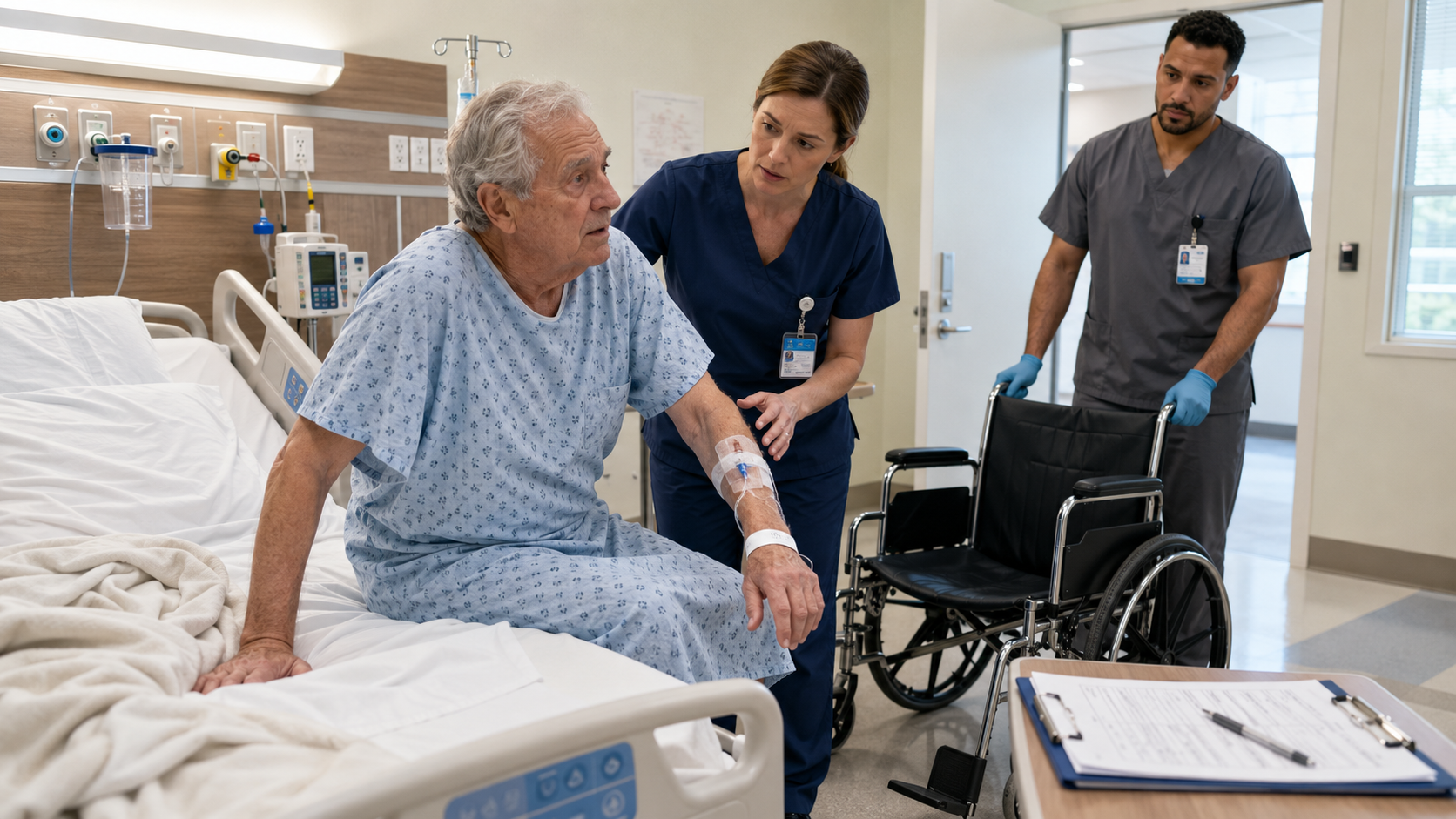
Current condition
A plan that was appropriate earlier may no longer be safe when the client develops weakness, dizziness, confusion, shortness of breath, unstable vital signs, or an unpredictable response. The nurse pauses the activity, protects the client, and reassesses before movement, transfer, delegation, or routine care continues.
Identification
Approved client identifiers are used before medications, specimens, treatments, procedures, and transfers. If identifiers do not match, the nurse pauses the process and resolves the discrepancy.
Falls and unsafe movement
Fall prevention is based on current findings rather than only a score. An alarm, call light, assistive device, or earlier mobility level does not make the plan adequate if the client continues unsafe movement or develops new symptoms.
Repeated unsafe movement requires evaluation of pain, toileting needs, confusion, fear, overstimulation, device discomfort, or another unmet need. If unsafe movement continues, the plan requires further nursing action and communication.
Restraints
When restraints are used according to policy and appropriate orders, the nurse evaluates skin, circulation, range of motion, comfort, nutrition, hydration, elimination, release intervals, and continued need. Restraints do not replace assessment, supervision, or correction of the underlying concern.
Infection prevention
A missed PPE step, contaminated equipment, compromised dressing, change in drainage, or break in required technique should be corrected. The nurse restores standard or transmission-based precautions, assesses the client and device site when indicated, communicates abnormal findings, documents the response, and reassesses whether the risk has been controlled.
If sterile technique is broken, the process stops, contaminated supplies are replaced, the sterile field is restored, and the nurse evaluates whether exposure or client risk occurred.
Respiratory hygiene and exposure
Respiratory-hygiene measures are used when coughing, secretions, or respiratory symptoms create exposure risk. The nurse provides appropriate source control, hand hygiene, separation, and precautions according to facility policy.
Persistent abnormal findings, continued exposure risk, device-site changes, fever, or repeated unsafe practice require additional action, notification, or escalation.
Oxygen and fire safety
Ignition sources, damaged electrical equipment, smoking materials, or other fire hazards near oxygen are addressed before routine teaching or documentation. The nurse then assesses respiratory status, verifies the oxygen setup, communicates abnormal findings, reinforces safety teaching, documents the response, and reassesses the environment.
Emergency preparedness includes following facility procedures for fire response, evacuation, equipment failure, emergency codes, and other unit-specific emergencies.
Delegation
The nurse considers stability, predictability of the outcome, task complexity, competence and role of the person receiving the task, instructions provided, and supervision required.
A task that was appropriate earlier may become unsafe when the client develops weakness, confusion, shortness of breath, abnormal findings, an unpredictable response, or a need for nursing assessment, teaching, or judgment. The nurse stops or revises the task, provides clear instructions, identifies findings that must be reported, follows up, and evaluates the client’s response. Delegation is not complete when the task is assigned.
Consent verification
When the client cannot explain what is being agreed to, the nurse pauses preparation, protects privacy, arranges qualified communication support when needed, notifies the appropriate person, and documents the concern. The nurse does not provide the responsible provider’s complete explanation in place of the provider.
Care proceeds only after the concern has been addressed through the appropriate process. Continued uncertainty, pressure, or communication barriers mean that the strategy remains incomplete.
Escalation and failure to rescue
Urgent action is not based only on whether one vital sign crosses a specific threshold. A client who becomes difficult to awaken, develops increased work of breathing, cannot speak in full sentences, or shows another rapid change requires immediate nursing action and escalation according to facility criteria.
Failure to rescue can occur when deterioration is recognized but the response is delayed, incomplete, or not escalated. Repeating the same ineffective notification while the client worsens is not an adequate response.
Build the safety strategy
A client on contact precautions is scheduled to leave the unit for an endoscopic procedure, but the surname on the identification band does not match the procedure schedule.
The client was alert and oriented earlier but is now disoriented, repeatedly attempts to climb out of bed, and pulls at a peripheral IV whose dressing is damp and lifting.
The consent form is signed, but the client says, “I do not know what they are doing,” while a family member says, “The form is signed, so just take them,” and a UAP is preparing the client for transport.
Integrated strategy example 2
A client receiving oxygen is on droplet precautions and is scheduled to leave the unit for a procedure. The consent form is signed, but the client tells the nurse, “I still do not understand what they are going to do.” A family member responds, “It has already been explained. We need to get this done.”
A trained UAP is assisting with morning hygiene before transport. The UAP reports that the client can no longer remain upright, is answering questions slowly, and becomes short of breath during repositioning. The client is coughing frequently and is not wearing a mask while transport staff wait at the doorway. A damaged electrical cord is connected near the oxygen equipment.
The strategy is effective only when immediate hazards are controlled, the client’s condition is stabilized or appropriately escalated, communication access and consent concerns are resolved, and responsibility for continued monitoring and follow-up is clear.
Strategy lab 04
A nursing strategy is not complete until the client’s response has been evaluated. Improvement in one finding does not erase unresolved teaching, safety, documentation, or follow-up needs.
The priority concern is addressed, the client improves or remains stable, understanding is verified, and follow-up needs are clear. Monitoring, reinforcement, and documentation continue as appropriate.
Some actions were completed, but an important need remains unresolved. Teaching may have occurred, but the client still cannot demonstrate the skill. Handoff may have occurred, but responsibility for a pending result remains unclear.
The client’s condition, understanding, or safety does not improve after the response. The nurse reassesses, gathers additional data, changes the approach, and communicates the concern.
The client worsens, an immediate hazard remains, delegation continues despite instability, consent concerns are ignored, infection-prevention gaps continue, or a serious concern remains unresolved after communication.
Rapid deterioration, respiratory distress, decreased responsiveness, critical findings, or another emergency change requires urgent or emergency response while immediate nursing care continues within scope.
Thirty-minute reassessment
14:30Select all that apply
A client preparing for discharge initially reported dizziness during drain-care teaching, so the nurse paused teaching, assisted the client to a safe position, reassessed the client, and communicated the change.
Thirty minutes later, the dizziness has resolved, vital signs have returned to baseline, a qualified interpreter has been used, and the client can explain the reportable findings correctly.
The client still contaminates the drain cap during return demonstration, the approved caregiver performs the skill correctly but is unavailable most evenings, the handoff states “Teaching complete,” and a home-support referral has been sent but not accepted.
Why it matters
Safe nursing judgment means developing the most appropriate response, carrying it out within scope, and changing the plan when reassessment shows that the strategy is incomplete, ineffective, unsafe, or urgent.
Integrated challenge
Evaluate an integrated nursing strategy involving physiologic stability, communication access, privacy, education, device safety, documentation, follow-up responsibility, and escalation.
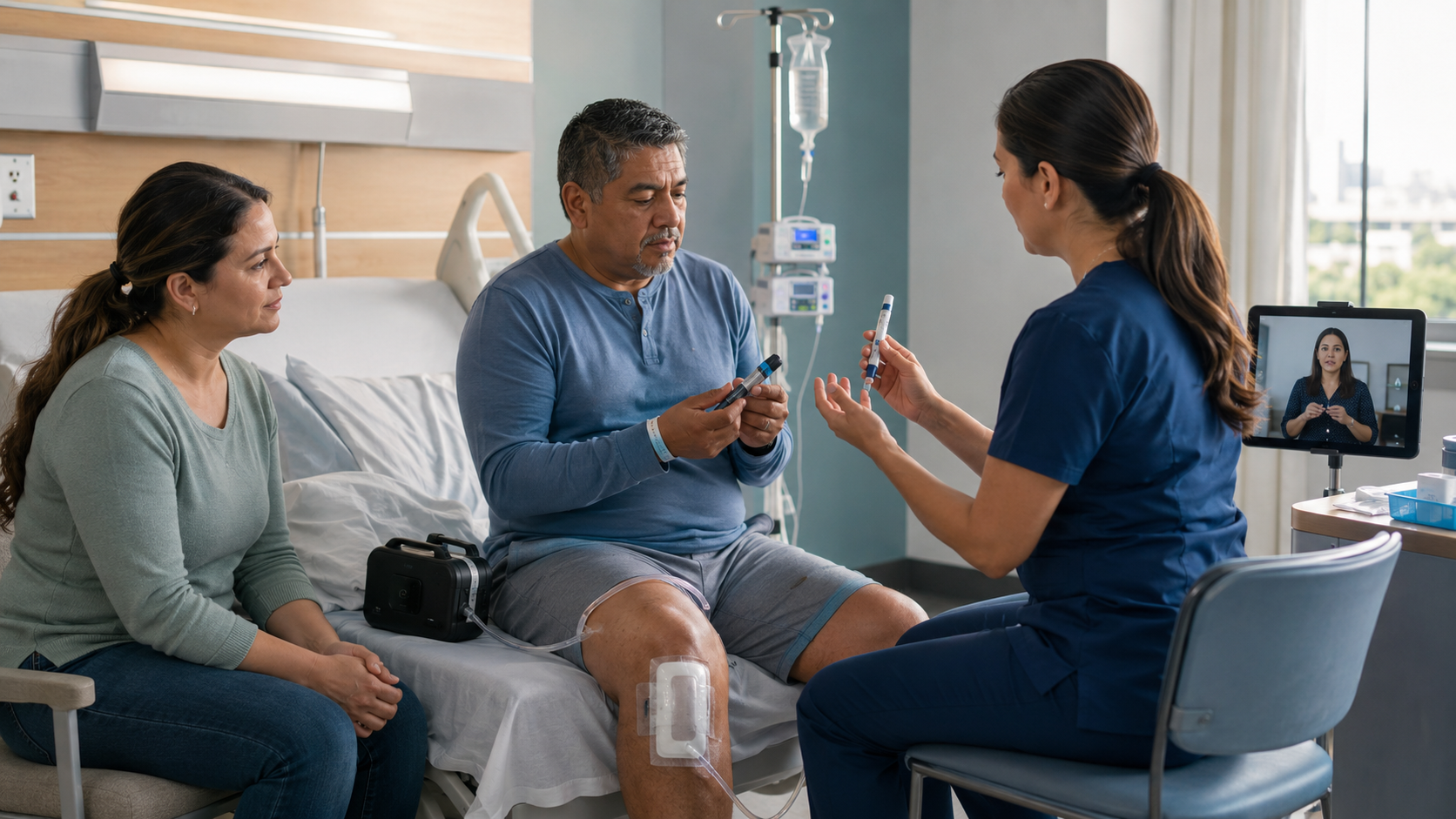
Client situation
Earlier, the client developed diaphoresis and a blood glucose level of 58 mg/dL. After prescribed treatment, the client is asymptomatic and the blood glucose level is 104 mg/dL.
The client prefers Vietnamese for healthcare discussions, cannot explain when to take the evening insulin dose, and cannot correctly demonstrate use of the insulin pen. The client previously requested to discuss medications without the daughter present, but the daughter continues answering questions.
The wound-device alarm is sounding, one edge of the dressing is lifting, no service has accepted the home-health referral, and transport is waiting.
Strategy lab complete
The safest plan protects physiologic stability, communication access, privacy, education, device safety, documentation, follow-up responsibility, and escalation.